Chuck: Shit, I thought only pansies wore neckties.
Ren: See that? I thought only assholes used the word “pansy.”
Ariel: Woo, he gotcha on that one, Chas!
Chuck: SHUT UP! Son of a bitch is gonna pay for that!
Yesterday I realized that, because of a popular ’80s hairdo sported by men and women alike, I always assumed that this was a gay couple rockin’ it in the Footloose parking lot (making it my favorite part of the movie for reasons highly mysterious to all). As a gayby, I didn’t have the words yet to explain why that couple and their genuine joy/pervy hot dog dancing made me smile — I just knew that it was 1984 and they were out; they were safe; they were dancing illegally with their straight friends, that’s when they became two of my childhood heroes.
Despite my childlike error (c’mon, I was six!) in correctly identifying the gender of a character who appeared in the film for less than a minute, I get it now.
In 2019, frightened white men who managed to slink into leadership positions are still trying to switch off all kinds of music, but really, when has that ever stopped us from dancing?
Over a glass of delicious red wine and a bowl of mediocre popcorn, my friend and I had a chat about potential Academy Award nominees for 2019, a list on which I included Melissa McCarthy for the fine work that we just seen that day in Can You Ever Forgive Me? After I mentioned that these days I would shower with awards any film that doesn’t have vomiting or a huge hairy spider that crawls across the screen for no reason (seriously Hollywood, with both of those?), I squirmed a bit on my bar stool and confessed to my friend that I haven’t been sleeping well lately. I know that many Americans suffer anguish over the state of the States and have lost sleep because of it in recent years, but this was something new. I’ve been waking up in the middle of the night terrified that a pop star could win an Oscar instead of seven-time nominee/six-time loser Glenn Close. And there’s absolutely nothing that I can do about it.
Instead of scolding me for fretting over something as trivial as the Academy Awards, my friend tilted her head, looked lovingly into my eyes, and perhaps reached across the table to take my trembling hand in hers (maybe it was glasses of delicious red wine). “You should take this table home,” she said, glancing down at the perfectly imperfect wood finishing between us. “It’s the perfect height for you to flip over from a standing position if Lady Gaga wins.” I have never felt so understood in my entire life; when it comes to truth-telling, this is the friend I call.
Last year I walked out of the theatre in a hazy daze after The Florida Project unable to go about my life for those first few minutes. Somehow my feet managed to get me out of the building, and when my brain started to put letters together and form words, I thought, “Whoa, that was an amazing movie, and I never, ever want to see it again.” When I walked out of Three Billboards Outside Ebbing, Missouri a few days later, I thought, “Mmm, kinda boring. I’m glad that was a bargain show.” Guess which one did well on Oscar night? That got me thinking about some films that are falling under that “Florida Project Hazy Daze” column. Deserving winners are never guaranteed awards, so I’ll let you know how that table flip works out this year.
Leave No Trace (2018): I’m ready to donate every single penny in my savings to help our veterans and their families. Thomasin McKenzie speaks more with her eyes than with her voice in this film, but break out the tissues when she opens her mouth to speak. Ben Foster is heartbreaking as her father, but she steals the show and a nomination for Best Supporting Actress wouldn’t be out of line:
The Rider (2017): Someone should stage a play with Brady Jandreau and Thomasin McKenzie without any dialogue, because here too, it’s all about what Brady doesn’t say in a story based on true events from the actor’s life. If the movie gets too heavy for you, just think of Meg Ryan singing, “Horses, horses, horses,” and that will level you out:
Hereditary (2018): The Academy could surprise us and nominate Toni Collette for Best Actress in a Leading Role, but if Sissy Spacek and Piper Laurie taught us anything in Carrie (1976), it’s that horror flicks are rarely compensated in acting categories. Toni Collette has snagged a few awards for a phenomenal performance in what I thought was an okay movie, and if I weren’t already on Team Glenn, I’d be happy with a Best Actress win for Team Toni:
The Kindergarten Teacher (2018): There are, oh, five or six hundred reasons why I want to marry into the Gyllenhaal family, and having Thanksgiving dinner with Maggie is just one. I’m slightly concerned that Maggie Gyllenhaal has become one of those “well, she’s always good” actresses who wait 43 years for an Oscar (go Glenn, go!), but she’s probably cool with that:
Love, Gilda (2018): I can’t remember the last movie that I had to see on its opening day before this documentary on SNL legend Gilda Radner. I was steps away from the movie theatre when the mother of one of my best friends texted to let me know that my friend was in labor. I thought, “Oh, how wonderful! Childbirth takes more than two hours, right? And documentaries are short, right?” Yes, I have seen RGB and Won’t You Be My Neighbor?, and yes, they were delightful documentaries worthy of packed theatres. But while I was laughing and crying through every emotion on the list, I realized that I had never shared Gilda Radner with other people before. Gilda and I had our own thing goin’ on, and in my childhood living room, it was always just the two of us. Bonded together for 88 minutes, I cried and laughed and cried some more with an audience that did the same, for they loved her as much as I did. For those 88 minutes, the outside world stayed outside. What’s more rewarding than that?
I mean, aside from a table that happens to be the perfect height for flipping and a friend who can spot one for you without measuring?
The Academy is fickle; no breaking news there. But every once in a while, I remember a single scene from an Oscarless movie and think, “That scene should have been awarded its own Oscar.” Would we honor the director, the writers, the actors, the musicians, the editors, the cinematographers, the costume designers, or the countless others who came together to assemble a single piece of art? Below are some scenes for which I would award the whole gang, and on today of all days, particularly the great Penny Marshall.
SavingGrace (2000)
Either you have never heard of this movie, or you scream, “Those ladies in the store!” when someone else brings it up:
Home for the Holidays (1995)
Dinner scenes must be difficult to shoot, but many end up close to perfect when they’re done right. Especially when there’s a relative who scares a child into whimpering for help from Mom:
A League of Their Own (1992)
If not for her dancing, then it’s an award for that laugh when Rosie throws Madonna back on the dance floor. This clip is brought to you by the letter “L” (and all the other the letters that spell “Penny Marshall”):
The Addams Family (1991)
It’s the only reason why I like Christmas music:
BigBusiness (1988)
We should have seen a four-way tie for Best Actress in a Leading Role:
FatalAttraction (1987)
Never in a million years would I take away Cher’s Oscar for Moonstruck, and Glenn will win in 2019 if I have anything to say about it. It ain’t swing, but oh, the way that they dance here:
Clue (1985)
“Flames on the side of my face” would have been too easy, so instead I nominate these two minutes in which every member of the cast gets a shining moment, including the (look up “genius” in the thesaurus) Madeline Kahn:
9 to 5 (1980)
I came close to excluding Dolly’s classic scene from this list because, well, you don’t enjoy hearing about guns, and I don’t enjoy talking about guns. We could ’round and ’round saying things like “It was a different world back then but did it shape things today?” or “Dolly would be a responsible gun owner,” but ultimately I landed at, “I’ve been laughing at this for 38 years, so ehhhh what the hell?
The Birds (1963)
I don’t rewind this as much as some others on here, but a special award goes to Bernard Herrmann and the Sound Department. Notice when you notice that you’ve been holding your breath:
A Star Is Born (1954)
I will absolutely fight with anyone who says that Judy didn’t deserve five or six Oscars for this one, but so did Harold Arlen, Ira Gershwin, and company:
To Have and Have Not (1944)
Can a cigarette win an Academy Award? In the 1940s, it may have been possible:
TheWomen (1939)
Joan Crawford and Rosalind Russell (no additional caption needed):
I have spent months trying to get my friends and family to understand how stressful it’s been to watch Laurie Metcalf and Allison Janney compete against each other during Awards Season. I have loved (and imitated) both of these exceptional artists for decades, and it was about three seconds after each film’s premiere that their performances became Oscar contenders for Best Actress in a Supporting Role (Allison Janney in I, Tonya, and Laurie Metcalf in Lady Bird).
Bounce with me for a few moments, and then please help me understand how I can cast an emotional vote for one beloved over the other.
The night after this welcomed itself into my house and found a spot on my bookshelf, I had a dream that Bette Davis came to a family gathering (perhaps posing as my grandmother; that part is still fuzzy) and autographed my copy of her book. Instead of a see-you-next-fall yearbook type of signature, Davis went to town and filled the front page with kind words, bringing a bit of sass at the end by telling me that she loves me almost as much as I love her.
Network execs didn’t think that audiences would believe a marriage between an all-American girl and a Latin man . . . but they did.
Years later, the Queen of Comedy became the first woman to run a major television production studio. You celebrate your President’s Day; I’ll celebrate mine.
I’ve watched Network (1976) many times. I’ve paid attention to every single word start to finish; I’ve fallen asleep before the opening credits; I can picture the label of our VHS tape written in perfect penmanship by my mother with a purple sharpie. Just moments ago I put it on in the background while I started to plan for Monday’s workday (which means finding the perfect jacket to wear to a morning meeting in a freezing conference room, while I pretend to care about what the VP’s children did over the weekend). My jackets now sit in a pile under this computer, because I had to stop and rewind this scene five times before I was able to move on with, well, the rest of my life. Through Network, I understand everything and nothing about 2017, and I’m only 13 minutes in . . .
“I don’t wanna talk about it! Every time I think about something nice, you remind me of all the bad things! I only wanna talk about the nice things.”
Nearing the climax of What Ever Happened to Baby Jane? (1962), Bette Davis (Jane) covers her ears and shrieks these words at Blanche, played by a suffering, bound and gagged but nevertheless buxom Joan Crawford. Let it be known here and now that on this, the last day of the last month of 2016, I agree with Jane completely, and not just because I will always favor Davis over Crawford. We have already seen lists of the terrible, horrible, no good, very bad crises that occurred in the last 365 days. If you have Internet in any of its forms, likely you will see photos and captions capturing the year’s events and bundling them into a neat little list that makes us believe, just for a second, that these events are still within our control. The phenomenally awful and the terribly wonderful experiences would strike within hours of one another, forming a year that is now rusted in deep inside the vaults of our memory.
In September, I saw Mom dance and laugh and jump around when we both saw Dolly Parton perform live for the first time. Dedicating “Coat of Many Colors” to all the good mothers out there, Dolly knew that Mom needed some love around that time. In early December, I took a mini road trip with one of my best friends, on which we discovered what we know to be the world’s largest crane – apparently they’re building a second Grand Canyon near Corpus Christi. Barbra Streisand sang “Happy Days Are Here Again” live just for me, and I bought tickets to see her only because of the fear that was telling me not to right after the Orlando nightclub shooting. And that other shooting. And the other one. And the other one. Trying desperately not to live in fear of performance venues, I was singled out of the audience not once but twice by the main stars of different musicals (Cabaret and Hedwig) for a few seconds of special treatment and attention. Jennifer Saunders delivered Absolutely Fabulous: The Movie and providing me with enough confidence to continue my search for the perfect job that involves heavy drinking and very little work. Those and other interviews went extremely well, all to be followed either by radio silence or rejection. The Nice truck attack intensified the disgusting threesome that Fear, Anger, and Sadness seem to be having this year, another news story that left before it arrived. The Stanley Kubrick Exhibition brought me face to face with the fifth Oscar that I’ve ever seen in person. The year gave me clients whose books made it on to NewYorkTimes bestseller lists, a new parent company with better benefits, accurate drug tests, and new databases that helped to automate manual work, improve efficiency, and eliminate jobs.
A devastating fire in Oakland took the lives of those who were trying perhaps to deal with the devastation that they felt over the election, leaving the rest of us speechless, guilty for surviving, frightened, and once again out of control. For the first time in history, we had a presidential election that actually affected every single person on the planet, and for first time in history, I permitted and even considered crying at work the next day. Like the T-word that I can’t bring myself to write, the word “hope” has become almost as painful to hear. And yet a breathtaking walk through Muir Woods followed a Thanksgiving dinner that, due to a turkey snafu, was completely refunded by Whole Foods, bless its gizzard.
Springtime brought me to the front door of KitTea, a cat café where I have volunteered and gathered enough love on the weekends to disperse like fairy dust on those around me. During the week, I rub the itty-bitty cat scratches and bite marks on my arms as a form of meditation, trusting that the cat gods will provide me with the strength to get through the week and its horrid news cycle. I had a biopsy that turned out to be a common, no-need-to-worry form of skin cancer, and in a few weeks, I’ll have a manly scar on my left arm where that ugly little scab is right now. When she sang “Islands in the Stream” for us, I held hands with one of my best friends when I saw Dolly for the second time this year, a cherished friend who knew without my telling her exactly what happened in my brain after I heard the nurse use the word “biopsy.” My birthday brought me a second Dolly pillow, solidifying the choice for “Woman of the Year” in my book and paving the way for every single dirty joke one could make about two Dolly pillows.
Another perfect December trip to Seattle brought me to the fireplace at my B&B in Capitol Hill, a few seconds of snow, a wine bar around the corner where I scored oodles of free drinks due to my Christmas Eve birthday, a drag show called “Homo for the Holidays,” and beautiful walks through Volunteer Park but no sight of Dan Savage or his delicious husband. Too many to count . . . we lost Elie Wiesel, Edward Albee, Gene, Leonard, Merle, Ali, Carrie, Debbie, George, Prince, and Bowie. Not enough to bless . . . the planet still has claim to Carol Channing and Betty White. Heklina’s GoldenGirls drag show kicked off my vacation with its annual Christmas performance. The book A Little Life changed mine, and I have 12-Stepped my way through a scarf addition, only to realize that it was a gateway drug to jackets, and now the closet doors won’t close. Despite what the country’s political climate tries to sell or tell us, my closet door WILL STAY OPEN.
I only want to talk about the nice things, too, which is why I haven’t watched any of the regular news shows since November 9th. We’re all exhausted, and I keep thinking of a line from President Josiah Bartlet on The West Wing: “[It] reminds me of that old joke about the optimist and the pessimist – the pessimist says ‘everything’s terrible, it can’t get any worse.’ The optimist says ‘oh, yes it can.’”
So when we need them, we hug our Dolly pillows and find a lost smile, holding dear those people who loved us enough to make sure that we go through the next year with a full set.
I remember nothing about EuropaEuropa (1990), and I wish that I could apologize to Phil Schlossberg who tried to make me watch it.
To prepare for our bar and bat mitzvahs, we attended Hebrew School on Mondays and Wednesdays and Torah School on Sundays. When we took Phil’s class that concentrated mostly on the years of World War II, we were stupid little fifth graders, and we behaved exactly how stupid little fifth graders behave when they’re forced to go to Sunday School. How did this Holocaust survivor, whose arm tattoo is an image that I cannot get out of my head, find the strength to stand in front of a group of such disrespectful, spoiled, little children? We didn’t listen; we didn’t want to be there; we should have tried to absorb every single word that came out of this brave man’s mouth. As I stare now at the word “brave” scribbled in my journal, the tiny five-lettered word just looks skimpy.
Certainly Phil had faced challenges in his life far more frightening than trying to teach groups of overindulged children, challenges that our 11-year-old minds were unable to comprehend. We treated the Holocaust as if it weren’t real; it was nothing more than a word to quiet us down, or perhaps the scariest ghost story that adults could tell children. We never gave Phil the respect, the attention, the recognition, or the gratitude that he deserved. He did what he did long before and long after my peers and I coasted through his classroom, so I can only hope that our disrespect that I remember is either exaggerated or hardly fazed him. The reasons why this has been on my mind should be pretty straightforward, and a part of me is almost thankful that Phil and other survivors of his generation are not around to see what this country has become.
An apology from me to Phil cannot undo how we behaved towards him, but still, I wish that I could tell him that I’m sorry.
Right now my mind is here, wondering if I have to go through all of the sadness, anger, and fear in order to cope with my version of today’s reality:
All I want is to be here once again. I want to feel the sensations of acceptance, hope, and strength, but I can’t seem to hear any of the songs that come between these two . . . yet:
In the summer of 2016, Barbra Streisand hit the road with her latest tour, The Music, The Mem’ries, The Magic. In early June, I sat uncomfortably on the fence with a spike up my ass when it came to buying tickets. Her prices are nowhere near affordable for those of us hanging on to our careers in publishing; the venue was a two-hour drive (or nine, with Bay Area traffic); and as much as I loved both the young, fun, silly “Fanny Brice” Barbra and the ‘70s Barbra who went in for that hair perm every other day, the duets of her recent years never made it to the top of my playlists.
On June 12, 2016, an unimaginable thing happened in an Orlando nightclub. Actually I’d give anything to call it “unimaginable,” but of course we could imagine it; we’ve seen it too many times and hoped for too many years that our leaders will try something other than prayer to make us feel safe. With more shooting tragedies that we can count or name or cry over, this was the first time when I ran to the bathroom because I thought I was going to be sick. As I paced around the toilet unsure of my stomach’s plans for me that morning, ten words that someone had said to me years ago brought my pacing to a halt – if they didn’t do something after Newtown, they never will. For a moment I simply existed in my bathroom, mentally disassociated from the world and staring at a framed picture of Bert and Ernie that, for the first time, failed in its attempts to brighten up the place. On my phone were texts of love or loving thoughts, invitations to lunches and drinks, dinners and movie nights, all of which I declined. I’ve been there before, and I knew what could happen if I joined the hundreds who were drowning their grief and sorrows. When raw emotion drastically assumes power, no amount of alcohol will produce the desired intoxicating results. Even if I could drink a bar out of business, in that state, I knew that my body would refuse the embrace of a red wine hug or allow itself to be wrapped in the warm blanket of a good Manhattan – nope, no wine hugs and whiskey blankets that day, but like a phone bill, a hangover is much more reliable; no matter how much fun I had the night before, a hangover is guaranteed to show up and ruin the day.
I said no to drinks, no to dinner, and no to movie night, but sitting around the house and consuming all the news coming out of Orlando was not an option. I had just started volunteering at a cat café around the corner from my house, and although I hadn’t signed up for shift on that particular Sunday, I took a chance and popped in to see if I could help out that day. Half café, half cat shelter (with health codes well intact), KitTea was exactly where I needed to be that afternoon, and I spent about five hours cooped up with a mama and her three kittens who were still in acclamation, because the poor dears still needed to be fixed and were in desperate need of attention. The world outside throbbed with its news cycle, but in that tiny acclamation room it fell away for those few hours, and I left with maybe not a full smile, but perhaps half of a grin, which was the best that we all could do that day.
That evening, high on kitten love but low with a helpless sorrow, I struggled for balance. Even on our safest of days, life is short, and only one thing would restore harmony – I bought my Barbra tickets.
Okay, enough of the therapy session. Watch Gilda, and then we’ll talk some more.
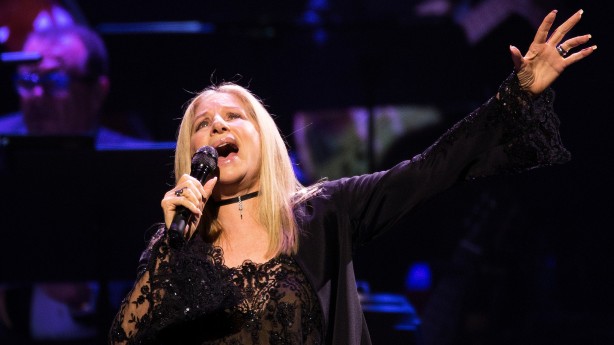
Barbra walked out in a dazzling little black number and started the show with “The Way We Were.” Yes indeed, my friends, she started her show with that classic of a classic, knowing full well that, with those first few hums, she had us sitting in the palm of her impeccably manicured hand. Girlfriend is 74 years old, so if perhaps she didn’t hit every single note of “Evergreen” or hold it for ten minutes like she did 30 years ago, we all know that I was still buying a T-shirt before I left. At the top of my “she probably won’t sing it” wish list was the song “Woman in Love” which has a note that Barbra and I practice in the car to and from work at least three times a week. With all her classics, not to mention a new album on the way, it was such an undeniable long shot that I didn’t even recognize it when she started to sing the first few words. That night, she gave us all of ‘em – “Evergreen,” “Stoney End,” “Papa, Can You Hear Me?” “People,” “Children Will Listen,” “Happy Days Are Here Again,” and after a costume change to a lovely gray evening gown, she twirled, swirled, and totally nailed “Don’t Rain On My Parade.”
You’ll allow me the bragging rights for a moment: After I see Dolly in a few weeks, my own Divas Live set list will be complete – Madonna sang “Like A Prayer” on two of the three tours that I’ve attended. I was about 14 years old when Mom took me to see Bette Midler sing “The Rose,” a night to remember. In Seattle, Cher performed “If I Could Turn Back Time” in the same outfit that she wore in the music video 25 years ago (not a single stitch has been altered; don’t even think such things!), and before Cher came on, Cyndi Lauper closed the opening act with “True Colors.” Perhaps my crowning achievement was sitting in the second row when Liza sang “Cabaret” and tried to hit the final note a second time after our first standing ovation. All dramatically different diva experiences, each performance comprised of magic from a different spell book, but on August 4, 2016, you could color me only one color, and that color was “Barbra.”
At the beginning of Act II, Barbra paraded back out, and although I was hoping for her to begin with “As If We Never Said Goodbye,” (which, l learned only recently, is from the SunsetBoulevard musical, tripling my love for the tune!), she started with a little a speech about changing the world before she hit us with, “Come with me, and you’ll be, in a world of pure imagination.” Not to be dramatic, but the light shining off of the 19,000 tears that ran down everyone’s cheeks was greater than any light show that the arena could have designed. I never look up set lists before I go to concerts, and since her new album hadn’t been released yet, the song “Pure Imagination” from the 1971 film, Willy Wonka and the Chocolate Factory (and I call it a film, NOT a movie!), truly came out of nowhere. We sang along through the tears as commanded, and the show continued with another set of both the old and the new. Through all the cloudy gray times, ongoing work frustrations, a new scratch on my car, and a very long wait on Netflix for A Star Is Born (1976), Barbra’s tour has been my mental happy place for weeks, and, if only for a second or two, who didn’t retreat to a mental happy place when Gene Wilder died last week?
Thousands of words in hundreds of obituaries memorialized the magic of Mr. Wilder not only as Willy Wonka but also as a permanent resident of Mel Brooks’s universe. When I hear the name “Gene Wilder” I think first not of Willy Wonka but of another magician, the late comic Gilda Radner (if you didn’t watch the entire video above, scroll back up. I can wait). Admittedly I glamorize any Hollywood relationship and cannot imagine it as anything less than perfect: Bogie and Bacall; Hepburn and Tracy; Lucy and Desi; Brooks and Bancroft; Bert and Ernie . . . in my head, even the marriages that ended in divorce were flawless, and every moment of every day was filled with nothing but love and laughter. Biographies and memoirs try to tell me otherwise, but until I sit down with these couples and hear true stories of heartache directly from their lips, well, you can’t believe everything that you read. Hardly what Hollywood would consider a photogenic couple with enough material for a glossy coffee table book (um, but I would totally buy it), Gene Wilder and Gilda Radner each had so much magic in one little finger, that combining all 20 of those fingers in marriage should have allowed them more time together before Gilda’s cancer forced them to part ways.
With each and every news cycle more tragic, outrageous, or disgusting than the one that preceded it, I start to doubt Wonka’s message in “Pure Imagination” that if we want to change the world, there’s nothing to it. Sure, buddy! You live a secluded life in a candy factory, completely closed off from the world with its revolting spoiled children and their irresponsibly vile parents. Seriously, what kind of father says “Alright, sweetheart” when his daughter demands that he buy her a golden goose and pink macaroons and a million balloons and performing baboons and . . . hmmm, okay, I’m beginning to understand Wonka’s doctrine of seclusion. If you want to change the heinous world, simply leave it and create one of your own. At times I find this idea perfectly reasonable and very appealing for a moment, but even with a chocolate river, lickable wallpaper, and dozens of little orange men from Loompaland running around the factory, Willy Wonka’s existence is nothing if not lonely. His musical, magical, and memorable life can exist only in the pure imagination of his guests, so I’m starting to wonder what kind of fantasy life exists in the pure imagination of Willy Wonka?
I guess it depends on who’s singing. The sound of only a few lyrics brings together the forces of Barbra, Gene, and Gilda like a trio of superheroes, and it’s with their help that I can exist in the world that seems to go out of its way to terrify us these days.
Those three teaming up to change the world . . . can you imagine?
A binding contract of lifelong friendship forges when the person across the dinner table chuckles after you say, “Good God; that’s a Hello Again-sized piece of chicken.” Frightfully large chicken brings to mind the frightfully good-bad film HelloAgain (1987), featuring Shelley Long as a woman summoned back from the dead after choking to death on a South Korean chicken ball. I didn’t know how else to break the ice and find a way to say hello. You know, again.
The “Closed” sign has been up at The Ticket Booth for some time now; other meddling voices have filled both my head and pen, pulling me in some new and exciting directions. But I began thinking about the booth and missing it, acknowledging the mental nudge that I wanted to open it up again and see how much dust had collected inside. Either sentimental or just a reaction to that dust, I found myself getting a little choked up trying to figure out why I had stayed away for long, and how, or where, I should start?
Shall we jump back in with the last Joan Crawford movie that I watched last week? Familiar butterflies began to flutter during SadieMcKee (1934) when I realized that it was the same film featured decades later in What Ever Happened to Baby Jane? (1962), another Joan Crawford picture that paired her with Bette Davis. As an actress without any recent successes to her name, both Crawford and her character in Jane sit in front of the television utterly mesmerized by Sadie, a towering and bouncy young lady almost 30 years her junior. T’was a powerful moment on the couch that night – life had all came full circle for me.
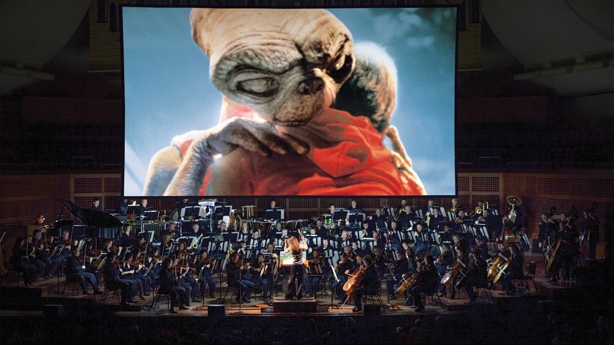
Not in the mood for big JC? I could brag about the trip we took to the San Francisco Symphony, where my family and I did not, in fact, get kicked out of E.T. the Extra-Terrestrial (1982) for rambunctious sobbing. The evening was a crowning achievement in my family’s history, as the Academy Award-winning score by John Williams generates a flood of nose hair-plucking tears for most of us.
Maybe you’d like to hear about the Stanley Kubrick Exhibition where Michelle and I saw an Oscar statuette, props and costumes from TheShining (1980), and pleasant letters from religious groups scolding Mr. Kubrick for turning the filthy Lolita (1962) into a film. If I were to steal one thing from a museum, I’d sneak out with one of those letters under my shirt. Read more about the exhibition on Little Magazine.
Not in a Kubrick mood? I get it; he’s a treat but not for every day. How about the time when I saw Cabaret: The Musical performed on stage, and the Emcee (played by Randy Harrison from QueerasFolk) pulled me up out of the audience to dance with him in front the entire theatre? “Do you have a little German in you?” he asked, and when I told him no, he hissed with smile, “Would you liiiiiiiike some?”
Too early for das Kit Kat Club? When I went to visit Dad for a boys’ weekend, I brought him two DVDs – Network (1976) and YankeeDoodleDandy (1942) – so he would never again have to worry about downloading them from those streaming services that tend to stall every three minutes. We ate; we drank; we swam; we barbecued; we teased Mom via text that we picked up KFC and without a coupon.
Oh, and a few weeks ago, Barbra started her concert with “The Way We Were.” I was there; I heard it; I saw Barbra Streisand perform live . . . no biggie.
The magic of film illuminates my life (the way your spirit illuminates my soul), but it just hasn’t appeared anywhere in my journals. And why? Because I’ve been sad. Hatred and fear surround us, and the two have joined forces to become what some have led us to believe is a constant threat that bursts into our nightclubs where we used to dance until dawn. It’s driving down promenades where we celebrate with our friends and friendly strangers. It’s shooting out of the guns controlled by law enforcement, and hours later it’s shooting out of the guns controlled by protesters. Hatred and fear surge from the mouths of men and women who are or want to become our elected leaders, and it’s being absorbed, magnified, and projected by their followers. For those of us who worry too much and insist on being in control of all things at all times, an overwhelming hodgepodge of sadness, anger, frustration and all the other googly–eyed emoticons was inescapable, but naturally I added one more fear to the pile – maybe writing about old movies just didn’t do it for me anymore.
Eventually the moment came when I could just about feel Cher’s palm meet the side of my face (we should all be so lucky), and I heard a firm but loving “Snap out of it!” It wasn’t a “snap out of it” advising me to ignore this world that frightened me so, but the time had come to tally up of all of those indestructible new memories and experiences that I just listed above. We have plenty to talk about and will, but before we chat about that new Ingrid Bergman documentary, the upcoming Dolly Parton concert, or the adorable little cat café where I started volunteering, first I just wanted to a quick little hello.
And it is time – it’s time first to acknowledge that sadness, anger, or fear and then release it all like you’re supposed to release a ghost. After that, grab your best (or, in my case, only) Dolce & Gabbana, find a theatre that serves champagne, and go see the new AbFab movie. We’ll talk more soon, because when you finally do snap out of it, you find that chicken balls are quite delicious.








 The Ticket Booth